Design & History
The story behind one of the world's most recognized pure gold bullion coins, from the Royal Canadian Mint's pioneering 1979 debut to today.
The Designer

Walter Ott, Royal Canadian Mint
Created the iconic maple leaf reverse design in 1979
Obverse
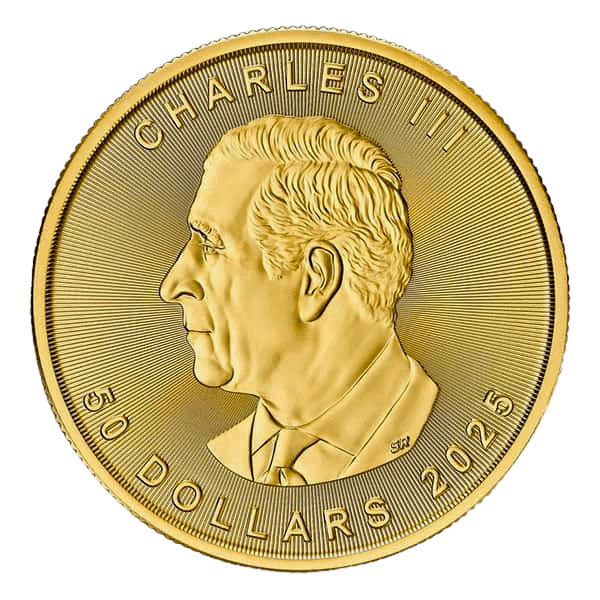
Monarch Portrait
King Charles III (or Queen Elizabeth II on earlier coins)
Reverse
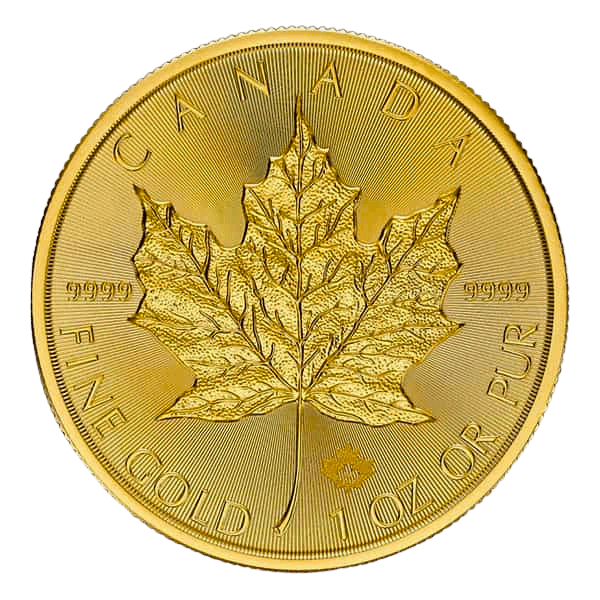
Maple Leaf
Iconic sugar maple leaf, Canada's national symbol

The Royal Canadian Mint
The Royal Canadian Mint, headquartered in Ottawa with a refinery in Winnipeg, is one of the world's most advanced minting facilities. Established in 1908, the Mint has earned a global reputation for innovation, quality, and purity in precious metals production.
In 1979, the Royal Canadian Mint introduced the Gold Maple Leaf as one of the first .999 fine gold bullion coins available to investors. The following year, they increased purity to .9999, establishing a new global standard for gold bullion purity.
Today, the Royal Canadian Mint is recognized as a world leader in precious metals refining and minting, producing coins and bullion products for collectors and investors worldwide.
Obverse: Monarch Portrait
The obverse of the Gold Maple Leaf features the portrait of the reigning monarch of the United Kingdom and Commonwealth realms. The current design displays King Charles III, while coins minted before 2023 feature Queen Elizabeth II.
Design elements:
- •Portrait: Official effigy of the reigning monarch
- •Face value: “50 DOLLARS” inscribed in both English and French
- •Year: Date of minting
The bilingual inscriptions reflect Canada's status as an officially bilingual nation.
Reverse: The Iconic Maple Leaf
The reverse features a single sugar maple leaf, one of Canada's most recognized national symbols. This elegant design was created by Walter Ott and has remained essentially unchanged since the coin's 1979 debut.
Design elements:
- •Maple leaf: Intricately detailed single sugar maple leaf
- •CANADA: Country name inscribed at the top
- •Purity & weight: “9999” and “FINE GOLD 1 OZ OR PUR”
Security Feature: Since 2013, a micro-engraved maple leaf privy mark with the last two digits of the year is visible under magnification.
Pioneering Pure Gold Bullion
Before 1979, investors seeking gold bullion had limited options. The South African Krugerrand, introduced in 1967, dominated the market but contained only .9167 fine gold. The Royal Canadian Mint saw an opportunity to create a purer alternative.
The 1979 Gold Maple Leaf launched at .999 fine gold, immediately offering investors a purer product. In 1980, the Mint increased purity to .9999 (four nines), establishing a new global benchmark for bullion purity that competitors would eventually follow.
“The Gold Maple Leaf set a new standard for bullion purity that transformed the industry and gave investors access to the purest gold coins available.”
Royal Canadian Mint Heritage
This commitment to purity helped establish Canada's reputation as a leader in precious metals refining and positioned the Gold Maple Leaf as a premier choice for investors worldwide.
Security Innovations
The Royal Canadian Mint has consistently introduced innovative security features to protect against counterfeiting:
2013: Radial Lines
Precise radial lines machined into the coin's background create a unique light-diffracting pattern.
2013: Micro-Engraving
A tiny maple leaf privy mark containing the last two digits of the year, visible only under magnification.
2014: Bullion DNA
Digital non-destructive activation technology allows authorized dealers to verify authenticity electronically.
Ongoing Innovation
The Royal Canadian Mint continues to develop new security measures to stay ahead of counterfeiters.
Learn more about security features at Monex Knowledge Base
What the Design Signals to Investors
For investors, the design conveys more than visual appeal:
Maximum Purity
The .9999 purity marking signals the highest standard of gold refinement, pioneered by the Royal Canadian Mint.
Government Authority
The monarch's portrait and official Canadian Mint provenance signal authenticity and weight/purity guarantees backed by the government.
Timeless Recognition
The maple leaf is instantly recognizable worldwide as Canada's national symbol, supporting liquidity and trust.
Global Acceptance
The Gold Maple Leaf design is recognized by dealers and investors worldwide, facilitating transactions across borders.
Security Confidence
Advanced security features integrated into the design provide authentication assurance for buyers and sellers.
Maple Leaf vs. Eagle: Design Philosophy
The world's two most popular gold bullion coins reflect different design philosophies:
Gold Maple Leaf
- • Walter Ott's 1979 maple leaf design
- • Simple, elegant national symbol
- • Emphasizes purity (.9999 fine)
- • Modern security innovations
- • Canada's flagship bullion coin since 1979
Gold Eagle
- • Augustus Saint-Gaudens' 1907 Liberty design
- • Complex, artistic imagery
- • Emphasizes durability (.9167 alloy)
- • Classic numismatic aesthetic
- • America's flagship bullion coin since 1986
Compare Maple Leaf and Eagle coins in detail in our coin comparison guide
Key Dates in Gold Maple Leaf History
Royal Canadian Mint established in Ottawa
Gold Maple Leaf launched at .999 fine purity
Purity increased to .9999 fine (four nines), setting world standard
Fractional sizes introduced (1/4 oz and 1/10 oz)
1/20 oz and 1/2 oz sizes added to lineup
1 Million Dollar, 100 kg coin sets Guinness World Record
Radial lines and micro-engraved security features introduced
Bullion DNA digital verification technology launched
Gold Maple Leaf remains one of the world's most trusted bullion coins
Related pages